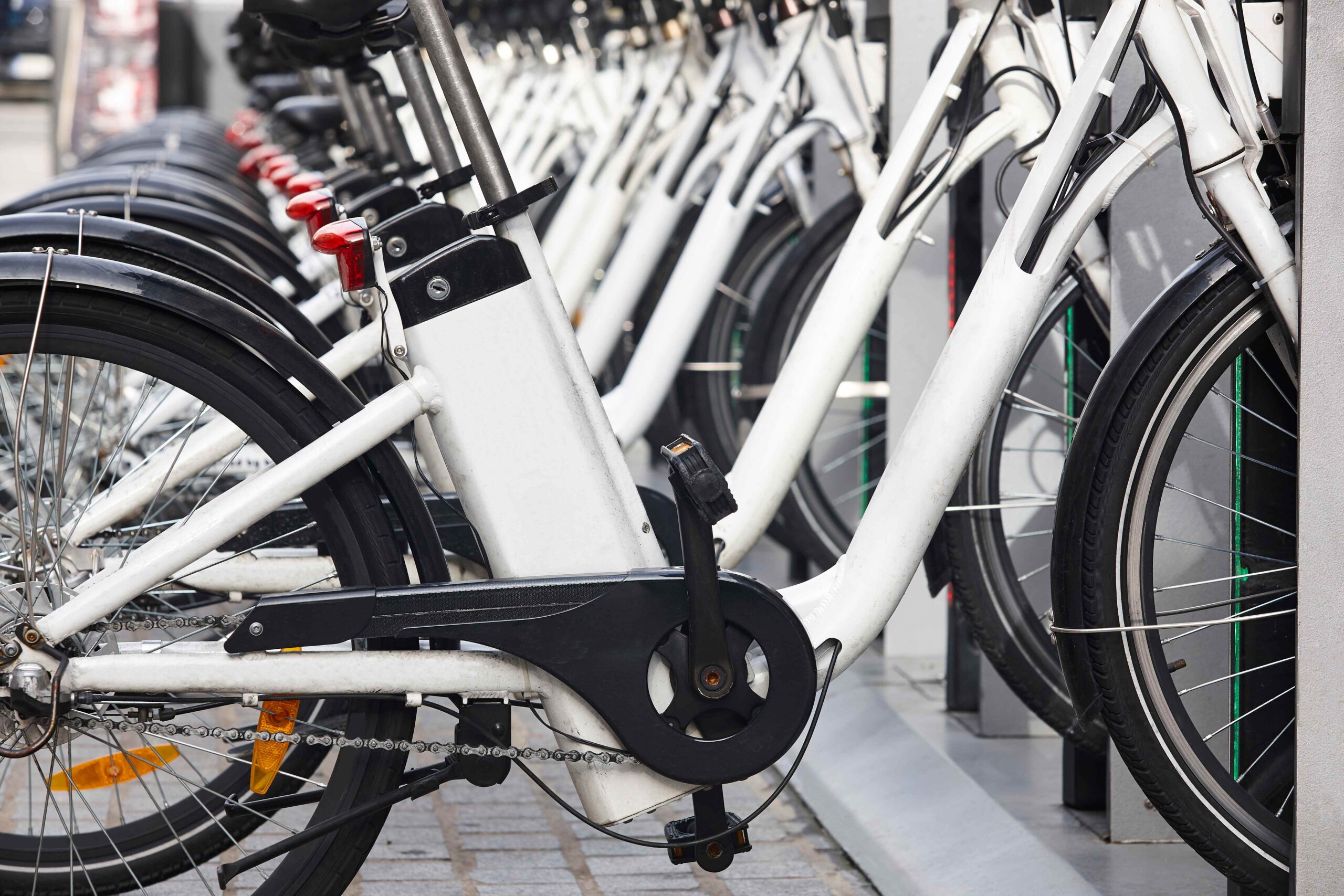
E-bikes have become a common way to move through Indiana County, Center County, and the surrounding western Pennsylvania region, from campus routes in State College to the older street grids of Johnstown and Altoona. Riders share those roads with cars, coal and aggregate haulers, and delivery trucks, and they contend with parked vehicles, pedestrians, and roadway defects that can all contribute to a crash. The Consumer Product Safety Commission, in its report on micromobility product-related deaths, injuries, and hazard patterns, has documented a rising injury count tied to e-bikes and similar devices.
Understanding the common causes of e-bike accidents can help riders recognize risks before they lead to a crash and play an important role in determining fault after one occurs. Many e-bikes can travel faster than traditional bicycles, which changes how quickly a dangerous situation can develop on the road.
Key Takeaways:
The most common causes of e-bike accidents involve interactions between riders, motor vehicles, road conditions, and equipment. A crash may have one identifiable cause, or several factors may contribute to what happened.
Motor vehicle drivers are involved in a large share of serious e-bike accidents, often because they simply don’t see the rider in time to react. Several recurring driver behaviors show up again and again in these crashes.
Checking a phone, adjusting a navigation system, or eating while driving all pull attention away from the road at exactly the moments cyclists need to be noticed. Pennsylvania prohibits texting while driving under 75 Pa. C.S. Section 3316, reflecting how significant this risk has become. Even a few seconds of distraction can be enough to miss a rider entering an intersection.
Cell phone records, in-vehicle infotainment logs, and witness accounts can all help establish whether distraction played a role in a crash. Because distraction-related collisions often occur without any braking or evasive action beforehand, the absence of skid marks at a crash scene can itself be telling evidence. This makes prompt investigation particularly valuable in these cases.
Drivers are required to yield the right-of-way to e-bike riders under the same circumstances that apply to other vehicles, including at intersections, when turning, and when merging. A driver who misjudges a rider’s speed, which tends to be faster than a traditional bicycle, can pull out or turn directly into the rider’s path. This miscalculation is one of the most common causes of intersection crashes involving e-bikes.
Pennsylvania also sets a specific passing standard. Under 75 Pa. C.S. Section 3303, a driver overtaking a pedalcycle must allow at least four feet of clearance and slow to a careful and prudent reduced speed. A pass that crowds a rider inside that margin is a violation of the Vehicle Code, and it is often the single fact that decides a sideswipe or forced-off-the-road claim.
Higher vehicle speeds reduce the time a driver has to notice and react to a rider, and they increase the severity of any resulting collision. Speeding is especially dangerous on roads that mix vehicle and bicycle traffic without a dedicated lane. Even a small increase in speed can significantly change the outcome of a crash.
Speed also affects stopping distance in ways many drivers underestimate. A vehicle traveling 10 miles per hour over the posted limit needs substantially more distance to come to a complete stop. That gap often makes the difference between a near miss and a serious collision.
This matters on the rural two-lane stretches that carry most traffic through Indiana and Clearfield counties. Posted limits run higher there than in town, sightlines are shorter on curves and crests, and there is rarely a shoulder wide enough to give a rider anywhere to go.
An impaired driver reacts late and misjudges distance and closing speed. Impaired drivers are also less likely to pick out smaller road users like e-bike riders, especially in low light. A driver who never brakes and never swerves arrives at the point of impact carrying every bit of speed, which is what separates these collisions from the rest.
Poorly maintained Pennsylvania roads can suddenly cause the rider to lose control, particularly at the higher speeds e-bikes are capable of reaching. A pothole or a sudden change in pavement height that a car would barely notice can throw an e-bike rider off balance entirely. In some cases, a government entity responsible for road maintenance may share liability, meaning legal responsibility to pay for the harm, for these hazards.
Riding at dusk, at night, or through poorly lit areas increases the risk that a driver won’t see a rider until it’s too late. Reflective gear and proper bike lighting help, but they can’t fully offset gaps in street lighting or intersections with limited visibility. Fog, heavy rain, snow, and ice compound the risk, cutting a driver’s sightline while lengthening braking distance for everyone on the road.
As e-bikes have grown more popular, mechanical and component failures have become a more frequent contributing cause of accidents. These cases often look different from a typical negligence claim, since the focus shifts to the bike itself rather than another driver’s conduct.
Lithium-ion batteries power most e-bikes, and defects in these batteries have been linked to a rising number of fires, sudden power loss, and even explosions. The Consumer Product Safety Commission has issued repeated warnings about lithium-ion battery risks in micromobility devices. A battery that fails mid-ride can cause sudden loss of power or control, sometimes without warning.
Faulty brakes, poorly manufactured frames, and defective forks, the two-pronged assembly that holds the front wheel to the bike, can all cause a sudden mechanical failure while riding. These defects sometimes stem from the manufacturing process, while other times they result from a design flaw present across an entire product line. When a component fails and causes a crash, the manufacturer, distributor, seller, or another potentially responsible party may face liability depending on the facts and applicable law.
Pennsylvania does not treat an e-bike as a motor vehicle. Under 75 Pa. C.S. Section 102, a qualifying e-bike is a “pedalcycle with electric assist,” and it is governed by the same rules of the road that apply to any bicycle. That classification is what determines which traffic laws apply to a rider and how a crash is analyzed afterward.
To qualify, the device must have a motor rated under 750 watts, weigh less than 100 pounds, have operable pedals, and stop providing assist above 20 miles per hour. The operator must be at least 16 years old. Riders need no driver’s license, registration, or insurance to operate one legally.
A device that exceeds any of those limits is not a pedalcycle with electric assist under Pennsylvania law. Many higher-powered models sold online clear 750 watts or assist past 20 miles per hour, which puts them outside the definition entirely. That distinction can reshape a crash claim, because a rider on a non-qualifying device may face arguments about which rules of the road applied and whether the device belonged on that stretch of roadway at all.
Evidence can help distinguish between competing explanations for an e-bike accident. A collision may look straightforward at first, but questions about speed, right-of-way, visibility, road conditions, or equipment failure can make the cause less obvious. Preserving relevant evidence early can provide a clearer picture of what happened and who may be responsible.
Photographs taken at the scene can help document vehicle positions, road conditions, traffic signs, lane markings, property damage, and the e-bike’s condition. Images of potholes, debris, damaged bicycle components, or the surrounding roadway can be particularly useful when those conditions may have contributed to the crash. Video from dashcams, nearby businesses, traffic cameras, or residences may also capture the events immediately before, during, or after the collision.
People who witnessed the accident may provide information that is not available from physical evidence alone. A witness may have seen a driver turn in front of an e-bike, pass too closely, open a vehicle door, disregard a traffic signal, or otherwise contribute to the collision. Witness statements can be especially useful when the people involved provide different accounts of how the accident occurred.
A police report may include the accident location, the people involved, statements made at the scene, visible damage, and the responding officer’s initial observations. It is a useful starting point, but it may not capture every fact a personal injury claim turns on, so additional evidence is often needed to establish how the accident occurred.
Responsibility depends on what caused the collision and which parties contributed to it. More than one person or entity may potentially bear responsibility when several factors combine to cause an accident.
Potentially responsible parties may include:
Identifying a potentially responsible party does not by itself establish legal liability. The evidence must connect that person’s conduct or the condition of the property or product to the accident and resulting injuries.
A rider’s own conduct enters the analysis as well. Pennsylvania follows modified comparative negligence, set out at 42 Pa. C.S. Section 7102, which reduces recovery by the rider’s share of fault and bars it entirely only when that share is greater than the combined fault of everyone else. A rider found partly at fault can still recover, and being blamed at the scene does not settle the question.
These claims are filed in the Court of Common Pleas, Pennsylvania’s trial-level court, in the county where the crash happened, and the differences matter. A pothole claim against a municipality in Indiana County carries a six-month notice requirement that a claim against a private driver does not, and missing that window can end a case that would otherwise have been timely under the two-year rule.
The following answers address common questions about the causes and legal implications of e-bike accidents in Pennsylvania.
A rider may be injured after swerving to avoid a vehicle, being forced off the roadway, or reacting to another person’s conduct, even when there is no physical contact between the e-bike and vehicle. Whether another party may be legally responsible depends on the evidence connecting that person’s conduct to the accident and resulting injuries.
Responsibility for a pothole-related accident depends on who owned or controlled the roadway and what legal duties applied. The location of the pothole, maintenance responsibilities, notice of the condition, and other facts may affect the analysis.
A driver may potentially be responsible when the driver’s conduct causes a rider to take evasive action and crash. Physical contact between the vehicle and e-bike is not necessarily required, but evidence must connect the driver’s conduct to the resulting accident.
Pennsylvania generally provides two years to bring a civil action for personal injury or death caused by another person’s wrongful act, neglect, unlawful violence, or negligence under 42 Pa. C.S. Section 5524. The deadline can vary based on the nature of the claim and the parties involved. Because timing can affect a person’s ability to pursue a claim, the applicable deadline should be evaluated based on the particular circumstances of the accident.
It can matter a great deal. A device with a motor over 750 watts, or one that assists past 20 miles per hour, falls outside Pennsylvania’s definition of a pedalcycle with electric assist, and an insurer may argue that a different set of rules applied to the rider at the time of the crash. The specifications of the bike are worth confirming early, because they can shape the fault analysis before any other evidence is examined.
What caused an e-bike crash is rarely obvious in the first few days, and that uncertainty is hard to sit with while you are trying to recover. Working it out means examining the available evidence and tracing how each contributing factor connects to the losses that followed.
At Marcus & Mack, we help injured riders across Indiana, State College, DuBois, Altoona, and Johnstown sort through those questions. Contact us today at (724) 349-5602 for a free consultation about your e-bike accident and your options.
Marcus & Mack