Unlike a standard fender-bender caused by a moment of distraction, a drunk driving crash is the result of a crime. Someone made the conscious decision to get behind the wheel while impaired, and you are paying the price for that choice.
Most people assume that because the police arrested the driver, the legal side of things is handled. They believe the police report alone will guarantee fair compensation from the insurance company.
This is a dangerous misconception.
In Western Pennsylvania, securing full compensation typically requires building a timeline of intoxication that predates the crash itself. And you must act quickly—proof, such as black box data and surveillance footage, might disappear, auto-delete, or be destroyed within days of the accident.
If you have questions about a suspected DUI crash in Pennsylvania, call Marcus & Mack. We will evaluate the available evidence and tell you exactly what steps are necessary to preserve the proof required for your claim. There is no obligation to work with us, but acting quickly is the only way to prevent evidence from disappearing.
It is easy to think that the police report is the final word on the accident. You see the officer conducting field sobriety tests, maybe you see the handcuffs, and you assume the insurance case is an open-and-shut matter.
However, police reports in Indiana County and across Pennsylvania focus strictly on the traffic violation and the criminal statute. They are building a case to prove guilt beyond a reasonable doubt under 75 Pa.C.S. § 3802. This standard requires proof of blood alcohol content (BAC) at the specific moment of arrest.
Your civil case operates differently. To win a personal injury lawsuit, you must prove your case by a preponderance of the evidence. This means showing it is “more likely than not” that the driver’s negligence caused your injuries. While a lower burden of proof, the scope of evidence is wider.
In Pennsylvania, if a driver is convicted of DUI, it may constitute negligence per se. This is a legal concept that simply means the driver is presumed negligent because they broke a law designed to protect the public. However, proving they were negligent is only half the battle. You still must prove causation and damages.
A defense lawyer or insurance adjuster might argue that while their client was drunk, the accident was actually caused by icy roads, or even your own driving. They might also argue that your injuries were pre-existing.
The police might not secure the vehicle’s black box. They almost certainly will not interview the bartender who served the driver two hours earlier. This is the gap between criminal and civil evidence. We fill that gap by investigating the events leading up to the crash, ensuring that no amount of blame is unjustly shifted onto you.
Your First Step: Obtain a copy of the full Police Crash Report. Do not settle for the simple exchange of information slip given at the scene. You need the full narrative report to look for codes indicating “alcohol suspected,” “test refused,” or specific officer observations of impairment.
The best evidence in a modern car accident case is digital. It is unbiased, scientific, and precise. Unfortunately, it is also highly volatile. Most digital recording systems have auto-delete functions that overwrite data in as little as 7 to 30 days.
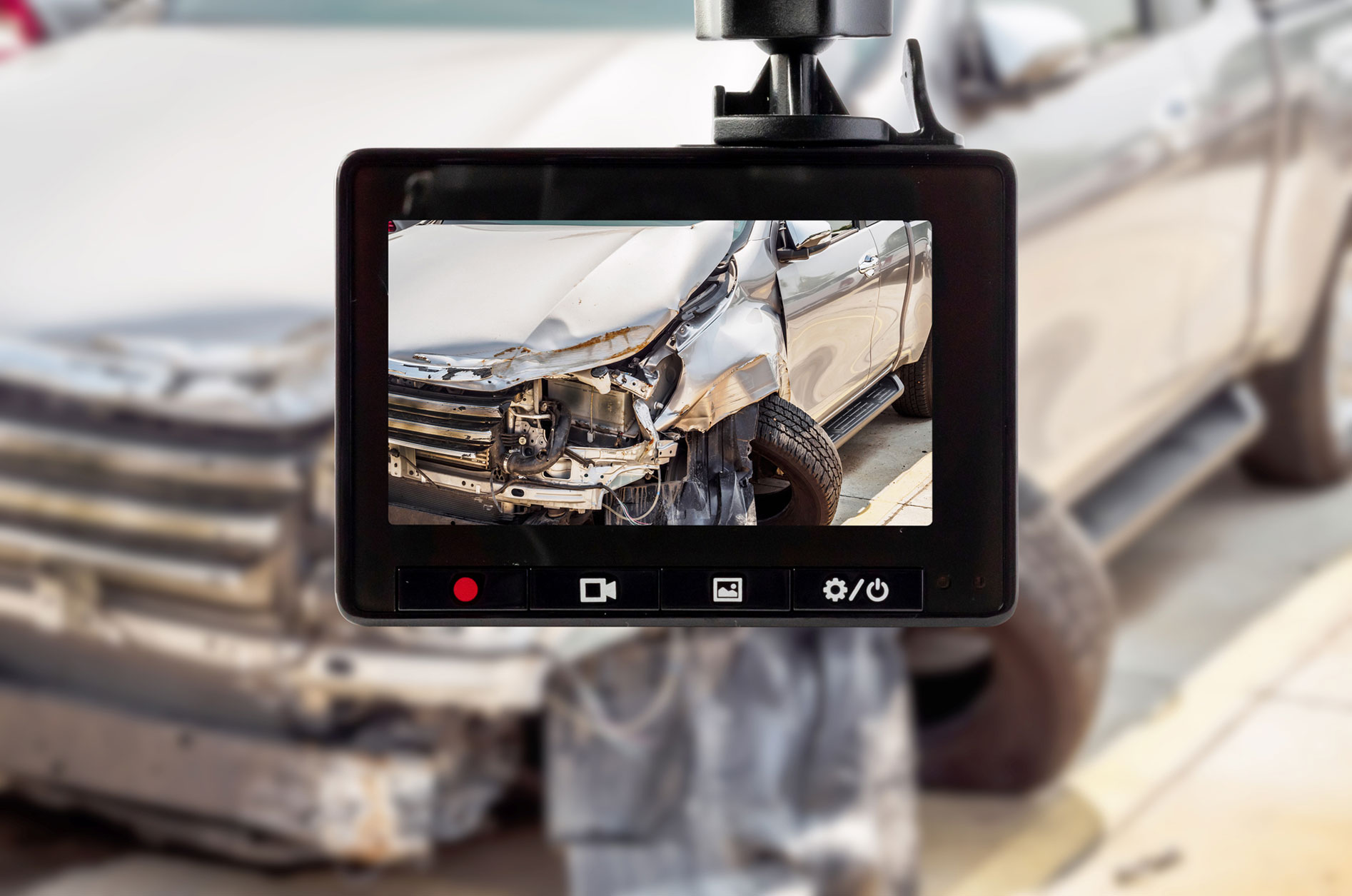
Most modern vehicles are equipped with an Event Data Recorder (EDR). This black box records vehicle telemetry for the 5 to 10 seconds immediately preceding a crash. In a drunk driving case, this data is invaluable.
A sober driver typically reacts to a hazard by braking or swerving. A drunk driver usually has a delayed reaction time or no reaction at all. The EDR data shows:
If the data shows zero braking until the moment of impact, it scientifically counters any defense argument that the driver tried to stop or that the weather was a factor. This paints a picture of a driver who was cognitively checked out.
If your accident occurred near a commercial area, such as Philadelphia Street or Wayne Avenue in Indiana, there is a high probability that a security camera captured the crash. Gas stations, banks, and retail stores commonly have cameras pointed toward the road.
However, businesses are not obligated to keep this footage for you. Most systems loop over old footage to save storage space. If we do not request this footage immediately, it will be gone.
From home, you could help this process. Open a map and identify the businesses near the crash site. Write down a list of potential camera locations and provide this to your legal team. We can then send the necessary legal requests to preserve that footage.
When evidence is destroyed, either negligently or intentionally, it is called spoliation of evidence. To prevent this, our practice focuses on sending preservation letters immediately after taking a case. These letters put the at-fault driver, their insurance company, and the vehicle owner on legal notice that they must preserve the vehicle, its digital data, and any other relevant records.
If a trucking company or commercial entity destroys black box data after receiving this notice, the court may sanction them. In some cases, the judge may even instruct the jury to assume the missing evidence would have shown the driver was guilty.
One of the harsh realities of car accident claims is that drunk drivers frequently carry minimum insurance limits. In Pennsylvania, the minimum bodily injury liability coverage is only $15,000 per person. If you have suffered a catastrophic injury, or if a loved one was killed, $15,000 will not even cover the initial emergency room visit.
To secure the compensation you need, we have to look beyond the driver to the establishment that served them. This is known as Dram Shop Liability.

Under Pennsylvania’s Liquor Code, a licensed establishment (such as a bar, restaurant, or club) could be held liable if they served alcohol to a person who was “visibly intoxicated.”
We need evidence that shows the driver was exhibiting signs of intoxication before they were served their last drink. We will find this evidence from:
You might think that medical records only exist to treat your injuries. In a legal claim, they serve a second purpose: they link the chemistry of the alcohol to the consequences of the crash.
The blood alcohol content (BAC) test is the anchor of the case. In Pennsylvania, blood tests taken within two hours of driving are generally admissible in court. The higher the BAC, the stronger the argument for recklessness.
If the driver refused the test at the scene, this does not ruin your civil case. In fact, it might strengthen it. In a civil lawsuit, a refusal to take a chemical test may be admitted as evidence. We can argue to a jury that the driver refused because they knew they were intoxicated. This is called an adverse inference, and it is allowed in civil cases even if it faces stricter hurdles in criminal court.
It is not enough to prove the driver was drunk. We must prove that their specific reckless actions caused your specific injuries. This is where the mechanism of injury becomes important.
A drunk driver typically fails to brake before impact. This results in much higher G-forces being transferred to your body compared to a driver who brakes at the last second. We work with medical professionals to document that your injuries, whether it be a traumatic brain injury, spinal disc herniation, or complicated fracture, are consistent with a high-velocity, no-brake collision.
This prevents insurance adjusters from downplaying your injuries as soft tissue issues or claiming they were pre-existing conditions. We use the physics of the crash to validate the severity of your pain.
As a private citizen, your ability to collect evidence is limited. You cannot force a bar to hand over its security tapes, and you cannot demand to see the other driver’s cell phone records. This is where the formal legal process, known as discovery, changes the playing field.
Once a lawsuit is filed, we have subpoena power. This allows us to demand records that are otherwise private.
Through subpoenas, we will access:
In most accident cases, you seek compensatory damages—money to pay for what you lost. However, in cases involving drunk driving, we can usually pursue punitive damages. These are designed specifically to punish the defendant for outrageous conduct and to deter others from doing the same.
Driving under the influence is frequently considered reckless indifference to the safety of others. By using the discovery process to reveal a history of DUIs or an extremely high BAC, we might be able to build a case that the driver’s behavior was not just negligent, but legally reprehensible.
An added bonus here is that insurance companies fear punitive damages because jury verdicts may be substantial, which could motivate them to offer a fairer settlement sooner.
We would use the refusal against them. In a civil trial, we can argue that they refused the test because they knew they would fail. Additionally, we look for other evidence in the police report, such as the officer’s observation of bloodshot eyes, slurred speech, or the smell of alcohol, to prove impairment.
This is an exception in Pennsylvania law. Generally, if you selected limited tort on your own car insurance, you are restricted from suing for pain and suffering unless you sustain a serious injury.
However, if the driver who hit you is convicted of DUI or accepts ARD (Accelerated Rehabilitative Disposition), the limited tort restriction is automatically waived. You regain your full rights to sue for pain and suffering regardless of the severity of your injury.
Absolutely. Dashcam footage is excellent evidence. If you have footage, preserve the original file immediately. Do not edit, crop, or compress the video. Provide the raw file to your attorney so we can maintain the chain of custody and use it to verify the timeline of the crash.
The days following a drunk driving accident are typically a blur of pain and confusion, but they are also the moment when the most important evidence is available. Insurance companies move fast to minimize their payout, attempting to settle before the full extent of liability, including potential punitive damages or dram shop claims, is uncovered.
You do not have to investigate this alone. Call Marcus & Mack today. We will launch an immediate investigation to secure video footage, black box data, and toxicology reports before they are lost.
Marcus & Mack